New Medication for schizophrenia
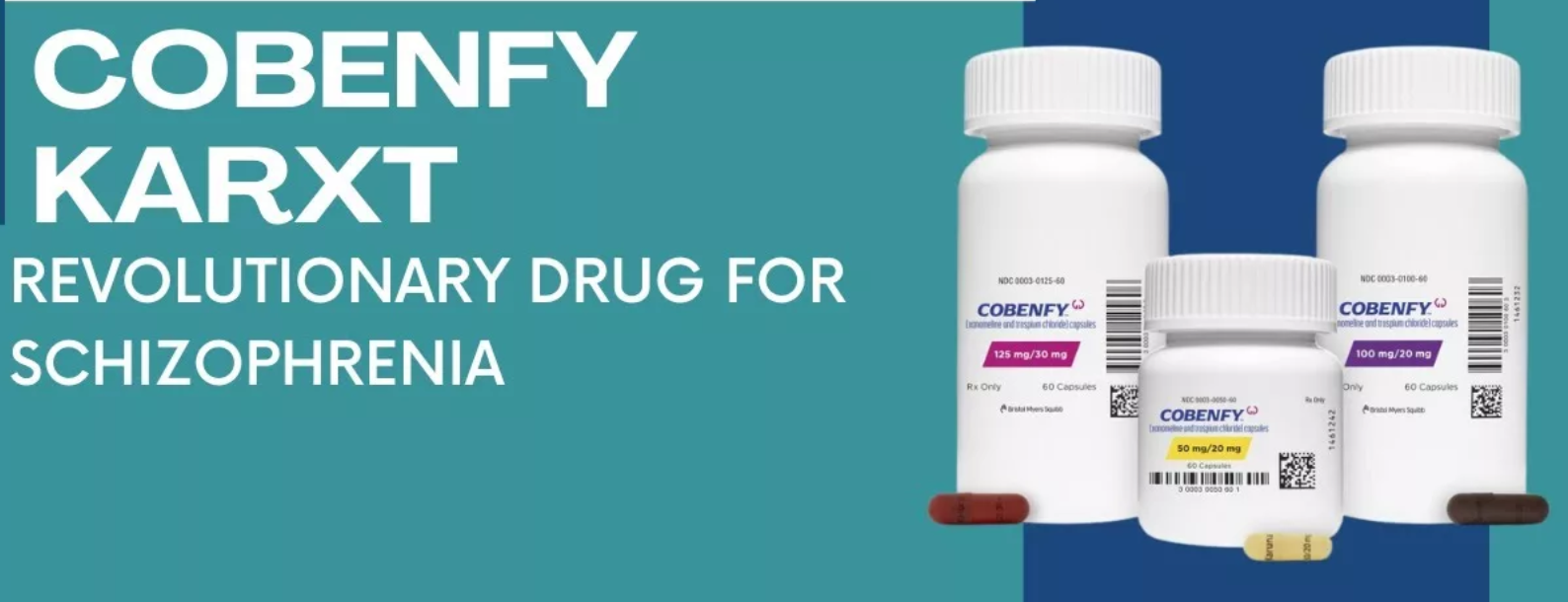
KarXT (Cobenfy – xanomeline/trospium chloride) is not merely a new antipsychotic; it represents the first mechanistic breakthrough in schizophrenia pharmacotherapy in over 70 years. Its arrival marks a paradigm shift from the dopamine-centric model that has defined antipsychotic treatment since chlorpromazine.
The Revolutionary Mechanism
KarXT is a co-formulation of:
- Xanomeline: A muscarinic M1 and M4 receptor agonist that acts on cholinergic pathways in the central nervous system
- Trospium chloride: A peripherally restricted muscarinic antagonist that reduces peripheral cholinergic side effects (gastrointestinal) without crossing the blood-brain barrier
This is fundamentally different from all existing antipsychotics. Rather than blocking dopamine D2 receptors, KarXT works through muscarinic cholinergic modulation, specifically enhancing signaling at M1 receptors (associated with cognition and positive symptoms) and M4 receptors (linked to psychosis and negative symptoms).
Why This Is the Biggest Story
1. First Novel Mechanism in Nearly Three Quarters of a Century The FDA approved KarXT (Cobenfy) in September 2024 as the first schizophrenia treatment with a genuinely new mechanism of action since typical antipsychotics emerged in the 1950s. Every other antipsychotic approved since then—both typical and atypical—ultimately works through dopamine D2 antagonism or partial agonism. KarXT broke that monopoly. 2. Efficacy Across Symptom Domains The EMERGENT-2 Phase 3 trial demonstrated that KarXT significantly reduced both positive and negative symptoms compared to placebo. This dual efficacy is clinically meaningful because negative symptoms (emotional withdrawal, avolition, alogia) have been notoriously resistant to conventional antipsychotics, which primarily address positive symptoms. 3. Distinct Safety and Tolerability Profile Long-term pooled data from the EMERGENT program (up to 52 weeks) showed that KarXT maintained a favorable metabolic profile—unlike the weight gain, dyslipidemia, and diabetes risk commonly associated with atypical antipsychotics. This addresses one of the most burdensome aspects of current maintenance therapy.
Clinical Significance
For practicing psychiatrists, KarXT offers several potential advantages:
- Cognitive benefits: Research suggests M1 agonism may improve cognitive dysfunction (a major unmet need in schizophrenia)
- Reduced extrapyramidal symptoms: Without D2 blockade, the risk of EPS, tardive dyskinesia, and hyperprolactinemia is theoretically minimal
- Metabolic neutrality: Emerging data suggest it does not induce the metabolic syndrome that drives much of the morbidity and mortality in schizophrenia patients
- Potential for negative symptom improvement: A domain where existing treatments have been largely disappointing
Current Status
KarXT is now marketed as Cobenfy in the US, and regulatory submissions are expanding globally. Competitors in the muscarinic space are already in development, but KarXT holds first-mover advantage as the proof-of-concept that non-dopaminergic mechanisms can work in schizophrenia.Summary: KarXT is the biggest story in schizophrenia because it proved the field could move beyond dopamine. For a disorder where treatment innovation had stagnated for decades, the validation of muscarinic agonism—backed by robust Phase 3 efficacy, a differentiated safety profile, and genuine negative symptom activity—represents the most significant therapeutic advance in modern psychiatry.