
24
Nov
2026
Early Beginning of Dementia and Schizophrenia
Posted On November 24, 2026
By [email protected]
And has No Comment
Yes, Emil Kraepelin and Alois Alzheimer were not only close professional colleagues, but genuine friends and mutual admirers who shared a defining partnership in the history of psychiatry.
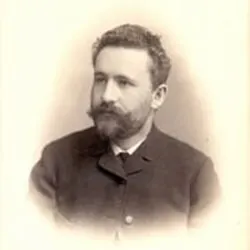
Their relationship and their shared use of the root word dementia form one of the foundational chapters of modern clinical neuroscience.
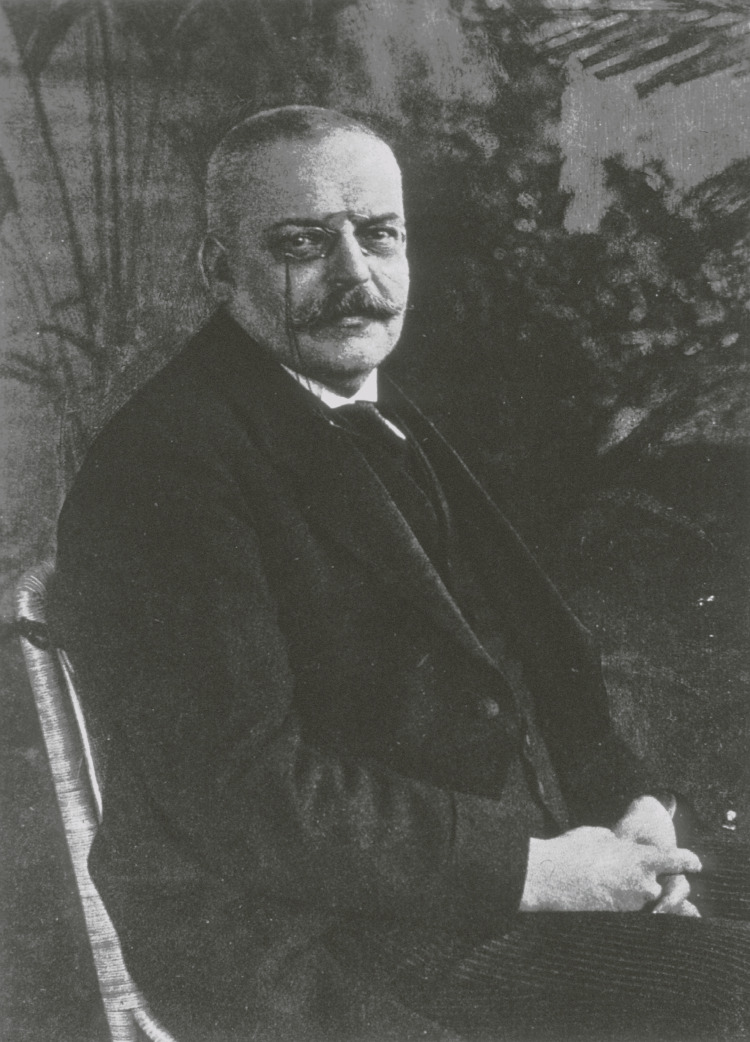
1. Their Relationship: Collaboration and Friendship
- The Munich Clinic: In 1903, when Kraepelin took the chair of psychiatry at the Royal Psychiatric Clinic of the University of Munich, one of his first and most important recruitments was Alois Alzheimer. Kraepelin created and funded an anatomical laboratory specifically for Alzheimer, giving him full autonomy to pursue neuropathology.

- Mutual Scientific Respect:
- Kraepelin was an unparalleled clinical observer and nosologist (organizing psychiatric disorders from clinical course and longitudinal outcome), while Alzheimer was a meticulous histopathologist.
- They saw themselves as two sides of the same coin: Kraepelin classified the clinical syndromes, and Alzheimer searched for their cellular and histopathological substrates.
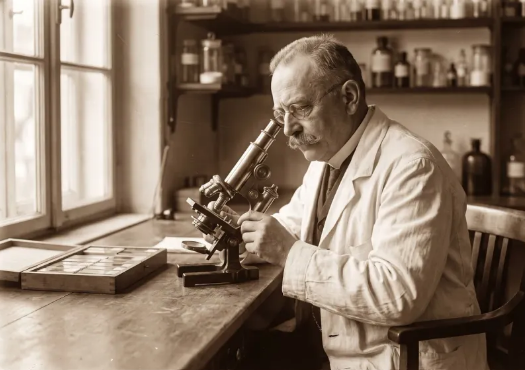
- The Naming of Alzheimer’s Disease:
- When Alzheimer published his famous 1906 case of Auguste Deter (presenting presenile memory loss, hallucinations, focal cortical deficits, and the pathognomonic neurofibrillary tangles and amyloid plaques on Bielschowsky silver staining), it was actually Kraepelin who formally coined the eponym “Alzheimer’s disease” (Alzheimersche Krankheit) in the 8th edition of his influential textbook Psychiatrie (1910). Kraepelin did this partly to honor his friend and colleague’s discovery and partly to cement the clinic’s prestige.
- Personal Bond:
- Contemporary accounts describe mutual personal warmth. When Alzheimer left Munich in 1912 to assume the chair of psychiatry in Breslau (Wrocław), Kraepelin deeply felt the loss of his friend and premier scientific partner.
2. Why Did They Both Use the Term Dementia?
The linguistic overlap between Dementia Praecox (Kraepelin) and Dementia (in Alzheimer’s presenile dementia) was rooted in late 19th-century psychiatric nosology, derived from the Latin de- (out of, away from) and mens (mind):
A. Historical Precedence and Morel’s Influence
- Kraepelin did not invent the phrase dementia praecox. He adapted the French phrase démence précoce, introduced in the 1850s by French alienist Bénédict Morel to describe a teenager who had previously been bright and socially functional, but progressively deteriorated into apathy, intellectual withdrawal, and blunted affect.
- Kraepelin adopted the Latinized phrase dementia praecox in the 4th (1893) and definitive 6th (1899) editions of his textbook to unify several syndromes previously regarded as unrelated:
- Hebephrenia (Ewald Hecker)
- Catatonia (Karl Kahlbaum)
- Dementia paranoides
- For Kraepelin, “dementia” denoted an irreversible, progressive deterioration of higher cognitive and psychic functioning (a loss of mental capacity), while “praecox” (precocious / early) emphasized its onset in adolescence or early adulthood, contrasting it sharply with manic-depressive illness (which followed an episodic, non-deteriorating course).
B. The Search for an Organic Substrate
- In the late 1800s, “dementia” was a broad clinical descriptor for progressive mental decay.
- Kraepelin hypothesized that all true dementias—whether occurring in youth or late life—were underlying physical, organic brain diseases (toxic, metabolic, or degenerative).
- Alzheimer’s role in Kraepelin’s laboratory was precisely to examine the brains of patients dying with both dementia praecox and late-life or presenile dementias.
- While Alzheimer uncovered distinct plaque and tangle pathology in presenile dementia (proving an identifiable degenerative histology), he and his colleagues could find no consistent gross structural lesions in dementia praecox, contributing to its later reconceptualization by Eugen Bleuler in 1908–1911 as schizophrenia (emphasizing psychological splitting rather than inevitable cognitive demise).
Summary Comparison
| Concept | Primary Nosologist | Meaning of “Dementia” in the Entity | Underlying Pathology |
|---|---|---|---|
| Dementia Praecox | Emil Kraepelin (1893/1899) | Early/precocious deterioration of volition, affect, and cognitive coherence in youth | Presumed organic/metabolic, though histopathologically elusive |
| Presenile Dementia (Alzheimer’s Disease) | Alois Alzheimer (1906, named by Kraepelin 1910) | Progressive loss of memory and intellect in middle-to-late life | Senile (amyloid) plaques, neurofibrillary tangles, neuronal loss |